Would you follow another truck at less than 50 feet if it could create marginal improvements in fuel efficiency? Under normal circumstances, that would be dangerously reckless. However, platooning technology might make this realistic – and safe – option for truck drivers in the near future.
When two trucks platoon, or utilize Cooperative Adaptive Cruise Control (CACC), there is a significant fuel efficiency bonus enjoyed by both trucks. Through the power of vehicle-to-vehicle and vehicle-to-cloud communications, the trucks can digitally tether to each other, reducing the safe following distance from 500 feet to as close as 30 feet. At such a short distance, the following truck enjoys significantly reduced air resistance and can reap up to 10% fuel savings. Thanks to some interesting physics, the lead truck benefits as well, although fuel savings are reduced to 4-5%.
If experts herald platooning as a “now” technology ready for commercial operations, why have we not seen its wider adoption? For all of its promise, platooning still has a series of hurdles yet to overcome.
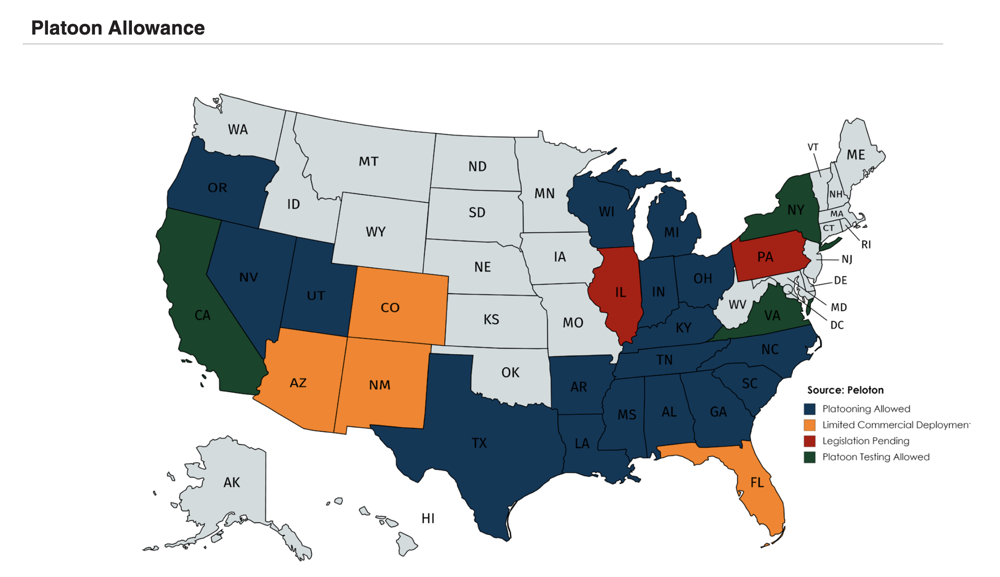
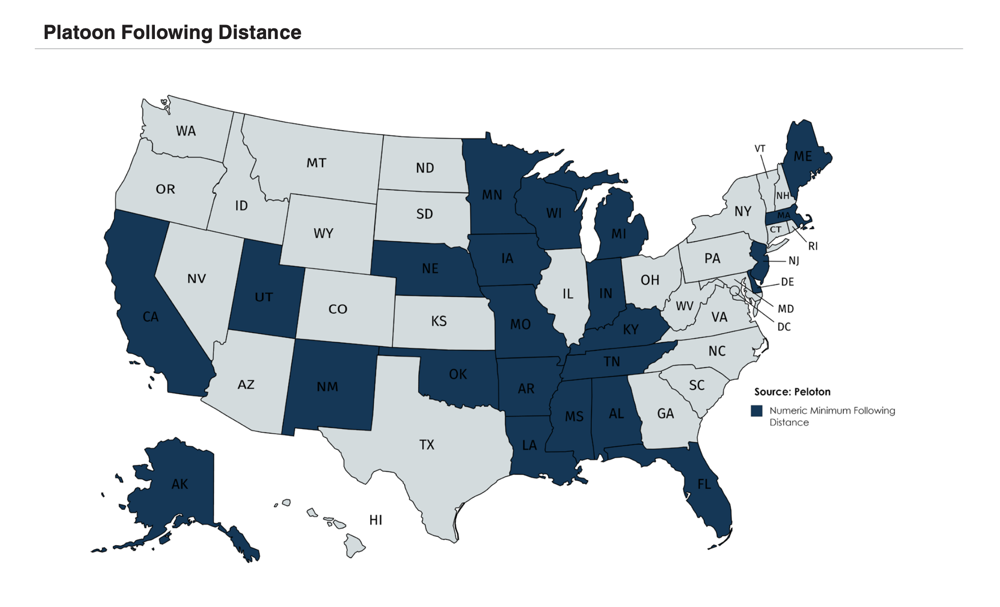
One issue is regulatory. While several states use “reasonable and prudent” as a following distance standard, several state laws define a safe following distance, set at up to 300 feet. Platooning by design runs afoul of these laws.
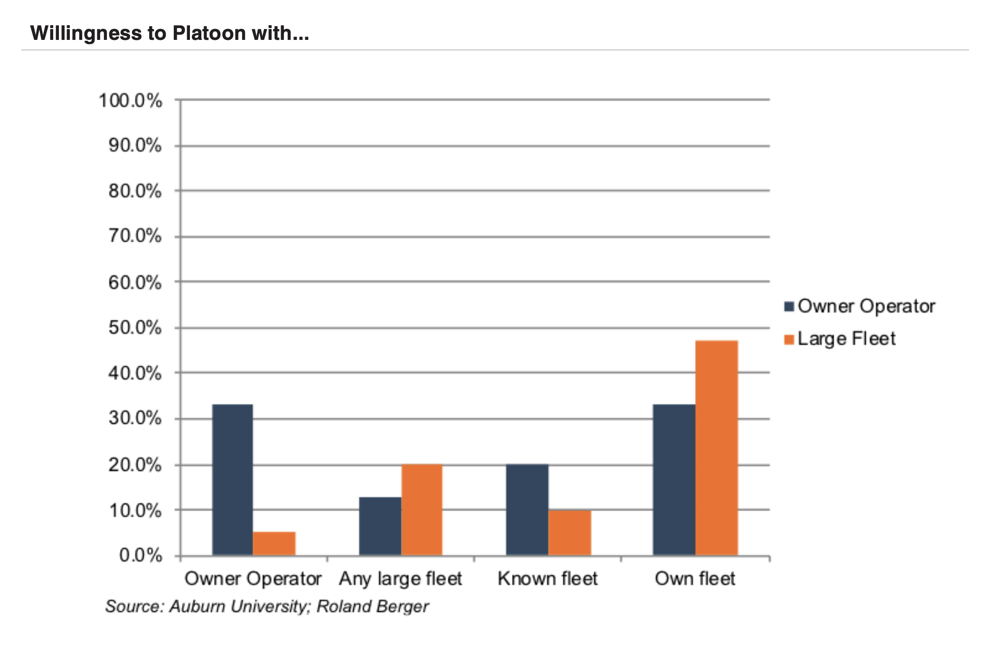
Another issue is competitive. Since the lead truck in the platoon benefits the least in terms of fuel savings, how would two trucks decide who has to take the first position? For two trucks in the same fleet, this issue might not be prominent, but the question is more difficult to answer if the trucks are from different fleets. Platooning outside of one’s own fleet helps a competitor, and many drivers say they would not be willing to do it.
Originally published in Mercer Capital's Transportation & Logistics Newsletter: Second Quarter 2018